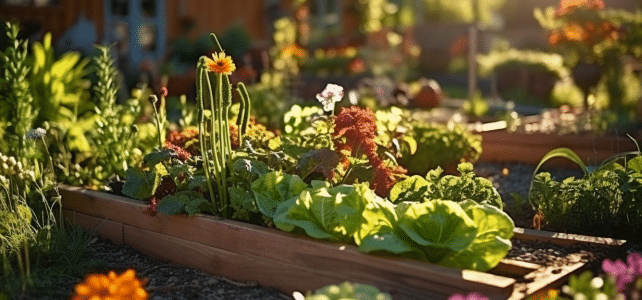
Gardening can quickly become a costly and resource-consuming activity. There are simple and effective methods to transform your green space without emptying your wallet. One of the most accessible solutions is to adopt economical and eco-friendly mulching techniques.
By using materials like fallen leaves, grass clippings, or even recycled cardboard, you can reduce weeds, retain soil moisture, and improve its fertility. In addition to these benefits, this approach allows you to recycle household waste, thus reducing your ecological footprint while promoting a lush and healthy garden.
Recommended read : How to Optimize the Management of Your Administrative Documents in Business
The benefits of economical and eco-friendly mulching
Mulching, an ancient gardening technique, offers multiple advantages for the eco-conscious gardener. By covering the soil, mulching reduces evaporation of water, thereby limiting the need for watering and better managing this precious resource. This method also improves the structure of the soil, preventing crust formation, which promotes water penetration and root oxygenation.
- Water savings: by reducing evaporation, mulching helps maintain consistent moisture.
- Weed reduction: by forming a physical barrier, mulching limits the growth of weeds.
- Improved fertility: the decomposition of organic matter enriches the soil with essential nutrients.
By promoting the decomposition of organic matter into humus, mulching enhances soil fertility. Earthworms, springtails, and other decomposer organisms transform plant waste into nutrients, thereby improving the clay-humus complex. This process enriches the soil, making nutrients more accessible to cultivated plants.
Read also : How to Accelerate Your Business Growth with Expert Partners
Mulching also creates a microclimate conducive to biodiversity. By sheltering beneficial insects and soil fauna, it contributes to a balanced ecosystem. For example, earthworms and fungi accelerate decomposition, thus fostering a living and fertile soil.
free vegetable garden mulching is a sustainable and economical solution. Use organic waste, grass clippings, or fallen leaves to create a natural and effective mulch. This approach reduces the need for manual weeding and pesticide use while protecting perennials, annuals, hedges, trees, and shrubs.
How to implement effective mulching techniques
To apply effective mulching techniques, start by choosing the right type of mulch. Organic materials like grass clippings, fallen leaves, or wood chips are recommended. They enrich the soil as they decompose.
- Grass clippings: rich in nitrogen, they decompose quickly.
- Fallen leaves: provide varied nutrients.
- Wood chips: perfect for slow decomposition and continuous organic matter supply.
Applying the mulch
For optimal effectiveness, apply a layer of mulch 5 to 10 cm thick on the soil. Be sure to space the mulch well around the stems and trunks of plants to avoid disease development. This technique is applicable in flower beds, vegetable gardens, at the base of hedges, trees, and shrubs, as well as in planters.
Precautions to take
Mulching can cause nitrogen hunger, especially when made from carbon-rich materials. To counteract this phenomenon, incorporate compost into the mulch layer. Compost compensates for the nitrogen deficit and accelerates decomposition.
Additional benefits
In addition to reducing competition from undesirable plants, mulching makes manual weeding easier. It provides a refuge for beneficial insects and other organisms, thus contributing to the garden’s biodiversity. Using organic waste and green fertilizers for your mulching reinforces this ecological and economical approach.