
When planning a trip, you type in the name of a country, and the same circuits pop up everywhere. The same beaches, the same temples, the same sunsets framed identically. The problem isn’t the lack of destinations; it’s the lack of filters to find those that are truly worth the detour without ending up in a queue.
Tourist offices themselves have changed their tune since 2023-2024. The UNWTO and organizations like Visit Iceland or the Spanish Tourist Office now direct travelers to secondary regions, far from saturated capitals. This trend, dubbed “undertourism,” is reshaping the map of destinations that deserve attention.
Access restrictions and quotas: what changes concretely for travelers
Before choosing an unusual destination, we now check if we can still access it freely. This reflex didn’t exist five years ago. Today, it determines the success of a trip.
Venice implemented a visitor tax and restrictions on tourist buses in 2024. New York strengthened its Local Law 18 in 2023, which significantly limits entire short-term rentals. In Southeast Asia and some European parks, daily quotas and mandatory reservations now apply.
These anti-over-tourism regulations are not trivial. They change the logistics of a stay: you can no longer book accommodation at the last minute in these areas, and some islands impose a maximum number of visitors per day. On perles-de-voyages.com, you can find itineraries that take these new constraints into account to offer less saturated alternatives.
The operational advice: before finalizing an itinerary, consult the official website of the city or park in question to check the current access conditions. These rules evolve quickly.
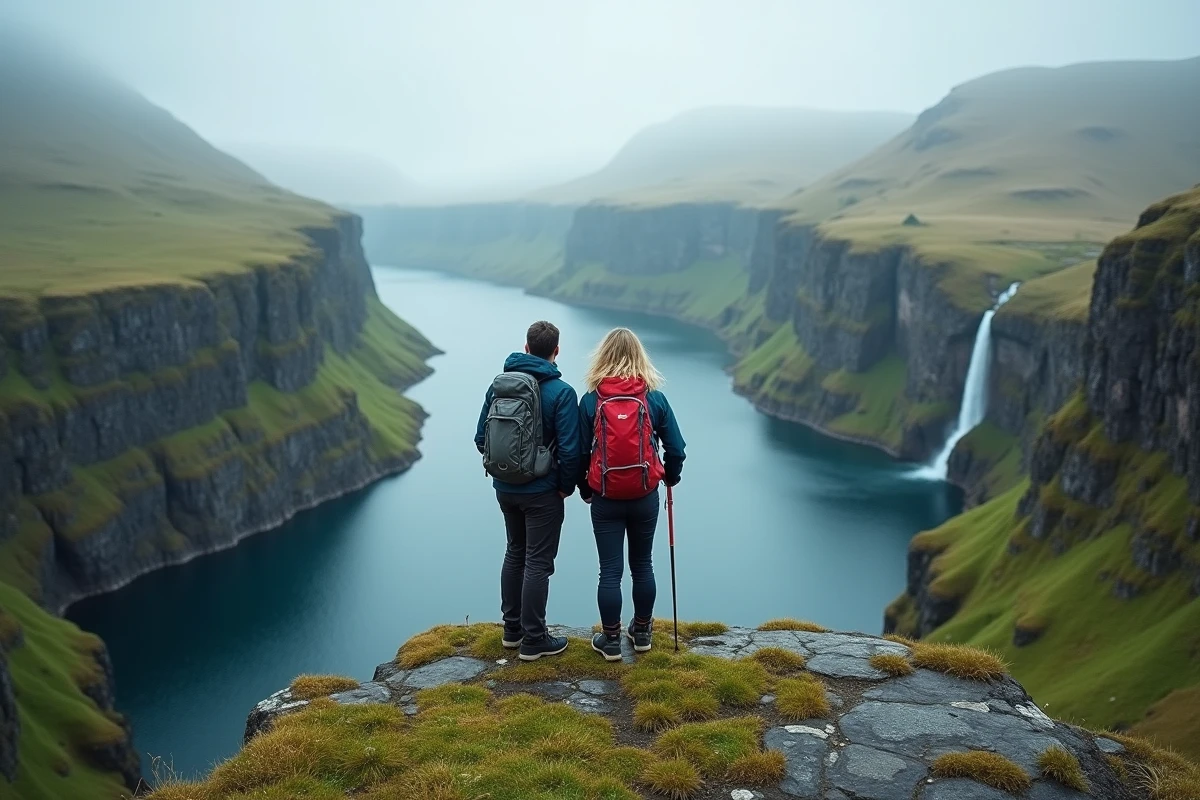
Disconnected travels: destinations without network as a selection criterion
For a long time, a destination was chosen for its landscapes or culture. A new criterion has emerged since the pandemic: the absence of digital coverage as a travel argument.
Accommodations in Scandinavia, Southern Africa, or certain Pacific islands explicitly position themselves in the “low-tech” niche. No Wi-Fi, no mobile network, sometimes not even permanent electricity. This is not a lack of infrastructure; it is an offer built around disconnection.
What this implies in preparation
A trip without a network cannot be improvised. You download offline maps before departure. You inform your loved ones about a lack of contact for several days. You bring a paper guide, which seems anachronistic but remains the most reliable solution when the phone becomes just a camera.
- Download topographic maps of the area on an offline app (Maps.me or equivalent) before departure
- Plan a payment method that does not depend on the network: sufficient local cash
- Bring a solar external battery if the stay exceeds three days without electrical access
- Check the medical evacuation conditions for the area, especially for high-altitude destinations or isolated islands
Feedback varies on this point: some travelers find disconnection liberating by the second day, while others struggle beyond 48 hours. It is recommended to test it on a short trip before committing to two weeks.
Unusual destinations in Africa and the Indian Ocean: beyond Madagascar
When talking about preserved nature and extraordinary landscapes, Africa is always mentioned. Madagascar rightly attracts attention, but other territories offer equally strong on-the-ground experiences with much lower visitor numbers.

Uganda, for example, combines dense tropical forests and primate observation in conditions where you encounter more rangers than tourists. The Namibian desert offers almost total solitude over vast distances, with a road infrastructure that requires a suitable vehicle and true autonomy in water and fuel.
Logistical constraints to anticipate
These destinations do not operate like a trip in Europe. Roads can become impassable during the rainy season. Distances between two supply points can sometimes be measured in hundreds of kilometers.
- Check the rainy season and adjust travel dates accordingly, not just the weather but the actual condition of the tracks
- Plan a transportation budget higher than expected: internal flights in Africa are significantly more expensive than intercontinental flights per kilometer
- Ensure that the visa and required vaccinations are up to date; some countries require a yellow fever certificate upon entry
For a first trip to Africa off the beaten path, favor a country with minimal but existing tourist infrastructure to maintain a safety margin without sacrificing adventure.
Little-frequented islands and archipelagos: finding the right balance between isolation and accessibility
Islands concentrate the fantasy of unusual travel. We imagine deserted beaches, untouched seabeds, and preserved local life. The on-the-ground reality is more nuanced.
Some archipelagos in the Pacific or the Indian Ocean check all the boxes for isolation, but air links are rare and expensive. A canceled flight can strand a traveler for several days without an alternative. Other islands, like the Canary Islands on the Spanish side or certain Indonesian islands outside of Bali, offer a balance between real change of scenery and manageable logistics.
The selection criterion that works in practice: check the frequency of air or sea connections to the targeted island. Fewer than two rotations per week means a logistical risk to integrate into the planning. More than two daily rotations, and the island has probably already shifted into mass tourism.
Traveling to unusual destinations is not just about pointing to a spot on a map. You prepare an itinerary considering recent local regulations, network coverage, transport constraints, and the season. An unforgettable trip, in practice, is a trip where the logistics have been sufficiently worked out to leave plenty of room for discovery.