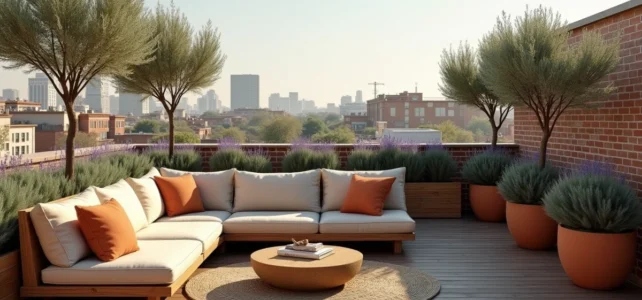
A rooftop is a terrace roof made accessible and designed for outdoor living. Transforming this space into a friendly terrace involves dealing with constraints specific to roofs: load capacity, wind exposure, local regulations, and thermal insulation. These technical parameters determine every choice of furniture, flooring, and vegetation long before the style question arises.
Structural and regulatory constraints of a rooftop terrace
Before choosing a pergola or garden furniture, the first piece of information to check is the load capacity of the roof slab. A floor designed to support waterproofing and rain may not necessarily bear the weight of a filled jacuzzi, concrete planters, or an outdoor kitchen. A structural engineering office can validate the load-bearing capacity and avoid costly surprises.
See also : Trends and Inspirations to Transform Your Home into a Unique Space
Several major French cities, including Paris and Lyon, have integrated specific requirements for accessible roofs into their revised local urban plans: minimum guardrail height, surface occupancy limits, and sometimes greening obligations. These rules directly condition the type of development that can be considered. Ignoring the local urban plan exposes one to forced compliance after work is done.
In co-ownership, the private use of a rooftop terrace often requires a vote in the general assembly. Insurance constraints are also evolving: some companies now require a specific declaration for developed rooftops, especially if the space hosts the public or heavy equipment. Checking one’s contract before starting work remains a basic precaution.
Further reading : Tips and Inspirations for Successfully Shaping Your Garden Hedges
To explore rooftop design ideas with Up Immo, these technical constraints form the foundation from which every inspiration takes shape.
Flooring for rooftops: beyond aesthetics

The choice of flooring on a rooftop is not limited to a matter of taste. The thermal impact of the flooring directly influences user comfort, especially in urban areas where roofs contribute to heat islands. Dark tiles absorb heat and make the space difficult to walk on barefoot in the middle of summer.
Reflective or light-colored materials are gaining ground in recent projects. Light-colored ceramic tiles, low-thermal-absorption composite wood, or even technical coatings with high solar reflectance can significantly reduce surface temperature. This approach goes beyond mere decorative trends: it extends the daily use of the rooftop during hot months.
Natural wood (treated pine, ipe, cumaru) remains a safe choice for its warm appearance but requires regular maintenance. Composite wood withstands the elements better without annual treatment. Decking laid on pedestals offers an additional advantage: it preserves the existing waterproofing by creating a ventilated space between the ground and the membrane.
Greening and garden corner at height
Creating a true garden on a rooftop requires consideration of weight and drainage. Self-supporting planters with water reserves limit watering while avoiding localized overloads. Favoring containers made of fiber or resin rather than terracotta significantly reduces mass.
The choice of plants deserves special attention. On rooftops, wind exposure is often stronger than at ground level. Compact-growing plants withstand better: ornamental grasses, lavender, rosemary, dwarf olive. Potted bamboo works well as a natural screen, provided non-invasive varieties are chosen.
- Grasses (miscanthus, fescue): wind-resistant, low maintenance, movement effect
- Mediterranean shrubs (oleander, pittosporum): heat and full sun tolerance
- Climbing plants on trellises (star jasmine, clematis): create vertical shade without ground weight
- Raised bed vegetable garden: herbs and cherry tomatoes adapt well to sunny rooftops
Four-season design: extending rooftop use
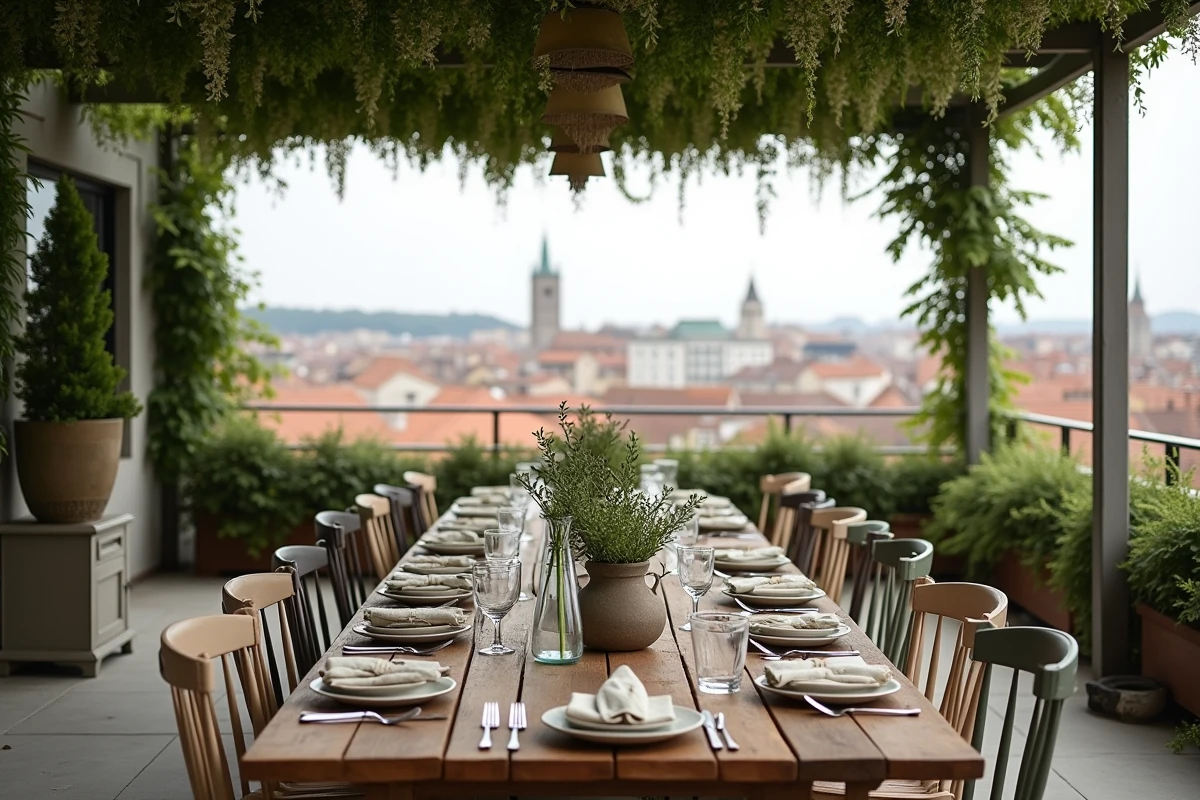
The majority of inspirational articles present the rooftop as an exclusively summer space. Experiences in co-ownership show a different trend: a well-equipped rooftop can be used from March to November, or even year-round in regions with a mild climate.
Lighting plays a central role in this extension of use. Low-consumption LED fairy lights, combined with adjustable wall sconces, allow enjoyment of the space after sunset without dazzling the neighbors. Soft, indirect lighting creates a more pleasant atmosphere than powerful spotlights.
For cool mid-season evenings, a fire pit or an outdoor bioethanol fireplace provides localized thermal comfort. A retractable awning or a bioclimatic pergola protects from light rain and intense sun, making the space usable in variable weather. The investment in these facilities is justified by the months of use gained.
Furniture and zoning of a rooftop terrace
A successful rooftop operates in distinct zones rather than as a uniform space. Defining a lounge area with low sofas, a dining space with a high table, and a relaxation corner with sun loungers creates natural circulation and gives the impression of a larger space.
- Dining area: table and chairs made of aluminum or woven resin, lightweight and weather-resistant
- Lounge area: modular corner sofa with removable cushions and integrated storage
- Relaxation area: freestanding hammock, outdoor rug, and waterproof poufs
Folding or stackable furniture facilitates winter storage and frees up space when all seating is not needed. Preferred materials remain aluminum, woven resin, and textilene, which withstand UV and moisture without rusting.
Wooden screens or composite slats serve both as windbreaks and visual separations between zones. They mitigate drafts, common at height, while preserving brightness.
Designing a rooftop benefits from being thought of as a comprehensive project where structure, regulations, and thermal comfort precede decorative choices. A rooftop terrace with properly sized load, drainage, and solar protection remains pleasant well beyond the summer season, fundamentally changing the way one inhabits an urban dwelling.