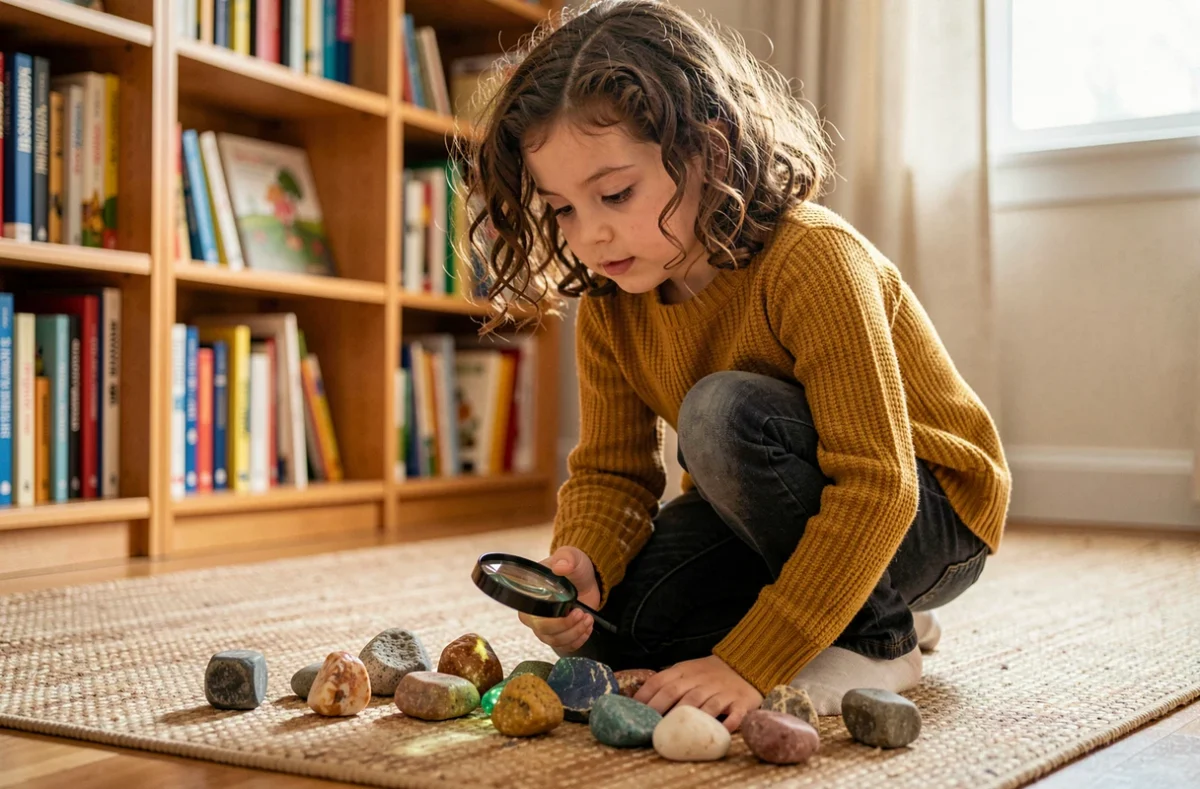
The awakening of curiosity in children relies on a simple mechanism: confronting a young brain with a concrete situation that resists, surprises, or requires manipulation. Playful and educational activities are not just meant to occupy time, but to create these micro-situations where the child observes, tests, and reformulates their understanding of the world.
Free play and structured activity: a distinction that changes everything
Before choosing an activity, it is essential to understand the difference between free play and structured educational activity. Free play is when the child decides the rules, pace, and objective. Structured activity is when the adult provides a framework, materials, and an expected outcome.
A study published in the journal Aula de Encuentro in 2025 by Carmen Recio Díaz shows that free play is a fully-fledged learning tool, distinct from activities simply labeled as educational. Mixing the two in the same day yields better results than relying on just one format.
Specifically, allowing a child to stack stones in the garden is not a waste of time. They work on balance, gravity, and patience. The structured activity (a painting workshop, an experiment with vinegar and baking soda) complements this foundation by introducing vocabulary, a method, and a specific question. Both formats can be offered to families wishing to learn more about Let’S Play Family and diversify daily approaches.
Age-appropriate sensory and scientific activities
The National Association for Environmental Education, in its synthesis Early-Childhood and Nature-Based Learning, emphasizes that concrete activities make abstract subjects accessible from ages 4 to 6. The key word here is “concrete”: touch, feel, observe a change in real-time.
Before age 4: sensory experiences take precedence
At this age, learning occurs through the senses. A bin filled with semolina, pasta, or sand allows for fine motor skills development and texture discovery. Adding cups of different sizes introduces the concept of volume without any technical vocabulary.
Water play remains among the most effective. Transferring, pouring, observing what floats and what sinks: each action poses a question that the child answers through experimentation.
Ages 4 to 7: introducing the method
This is the age range where the child can formulate a simple hypothesis (“I think the ice cube will melt faster in the sun”). Kitchen science experiments work particularly well:
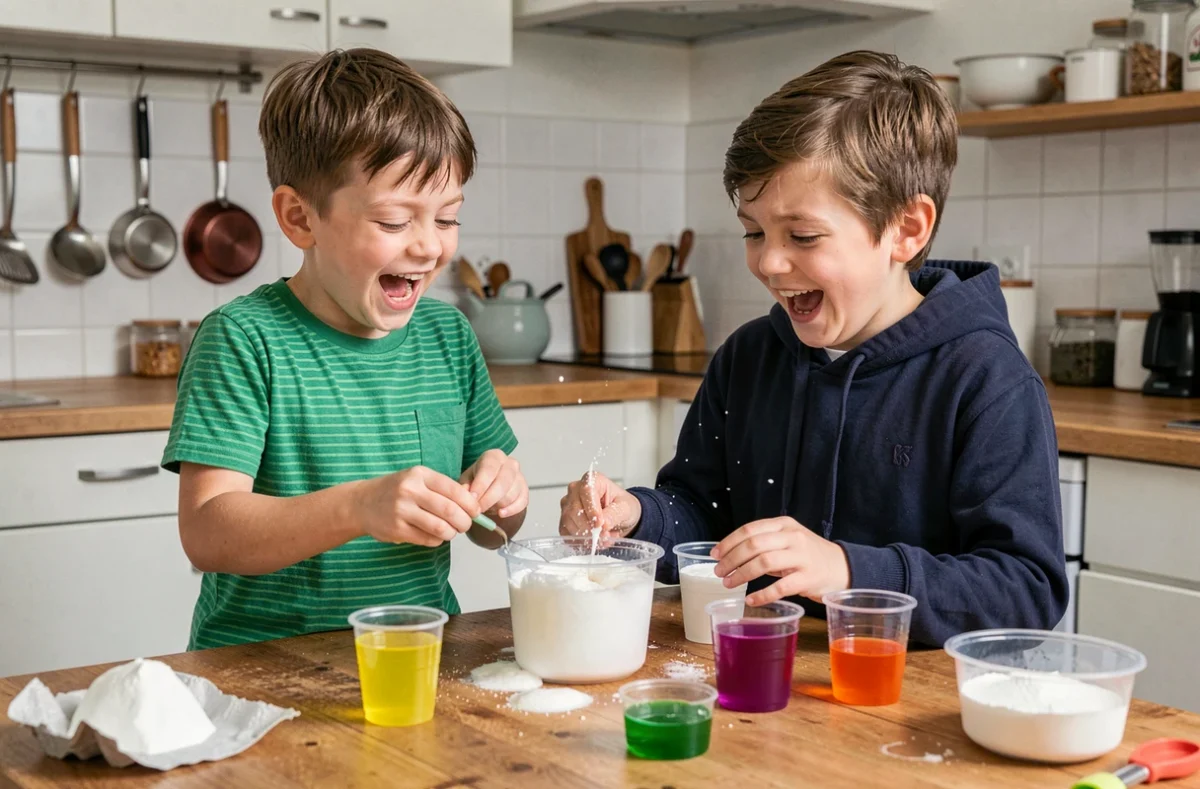
- Mixing vinegar and baking soda to observe a visible chemical reaction, then asking the child to predict what will happen with a larger quantity
- Germinating lentils in damp cotton and comparing growth based on light exposure, noting observations in a notebook
- Making salt dough and measuring proportions, which introduces the basics of calculation and weighing without a workbook
The necessary materials are already found in most kitchens. No specific purchases are required for these activities, making them easily reproducible on a daily basis.
Family environment and the role of the adult in awakening
The same synthesis from the National Association for Environmental Education, based on 28 studies, identifies parent involvement as a determining factor in the effectiveness of awakening activities. An activity done alone by the child and the same activity accompanied by an adult asking questions do not produce the same effects.
Accompanying does not mean directing. The most productive posture is to ask open-ended questions: “What do you notice?”, “Why did it change color?”. The adult reformulates the child’s observations with slightly more precise vocabulary, without correcting or interrupting the exploration process.
The synthesis also specifies that the quality of the activity matters more than the time spent outside. Ten minutes of attentive observation of insects in a park provide more than an hour of passive walking. This finding encourages prioritizing short but intentional sequences: a collection of leaves followed by sorting by shape, observing ants with a magnifying glass, a drawing from nature.
Screens and real activities: the recent French framework
The report from the expert commission submitted on April 30, 2024, recommends no screen time before age 3 and discouraged use until age 6. Since January 1, 2025, the health booklet distributed to families reiterates the guideline of zero screen time before age 3.
This regulatory framework reinforces the place of manual and sensory activities in the daily lives of young children. It is not about opposing screens and educational games, but recognizing that the time available before age 6 is better spent on concrete manipulations.
Activities such as DIY, gardening, or simple scientific experiments directly respond to this logic. They engage multiple senses simultaneously, require physical interaction with materials, and produce a visible result that the child can show, comment on, or repeat.
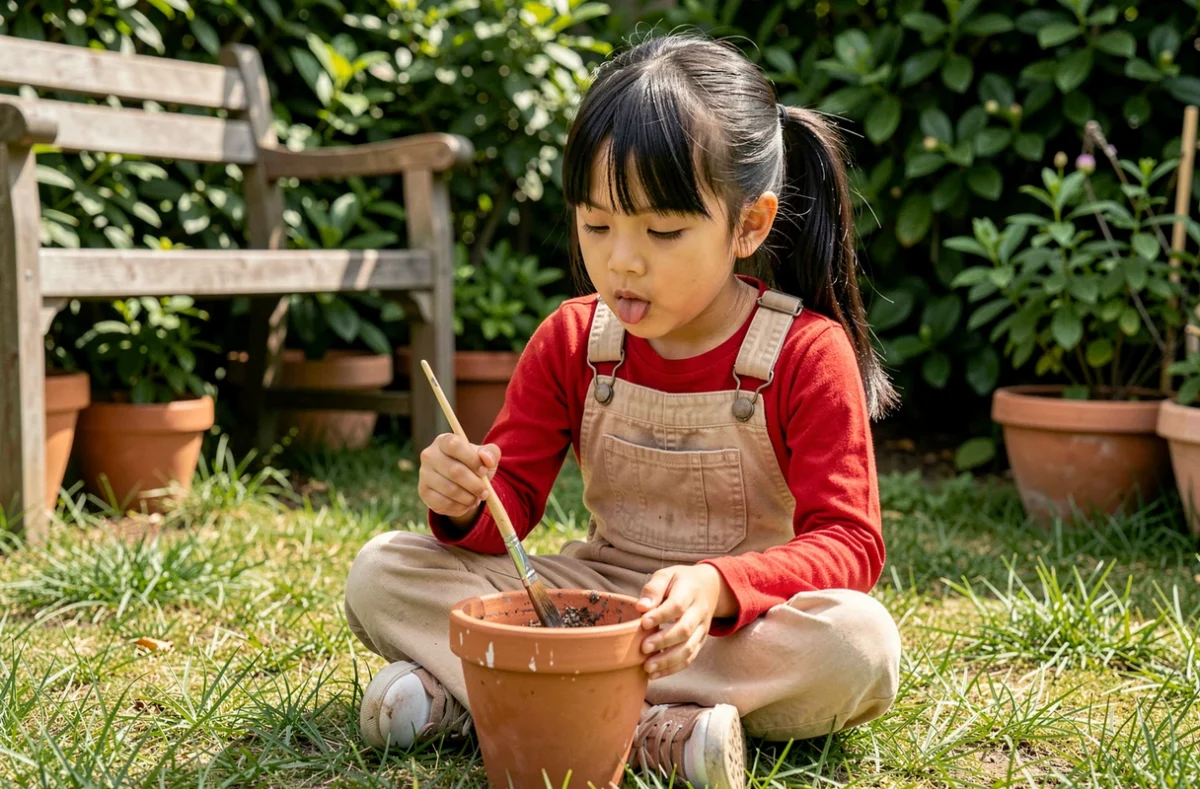
- Potted gardening (herbs, radishes) allows for tracking a complete growth cycle in a few weeks
- DIY with recycled materials (rolls, boxes, caps) develops planning and problem-solving skills
- Free construction games, without instructions, encourage the child to invent their own structures and test their stability
Results from studies on nature-based learning remain promising, even though several studies involve small samples. The basic principle, however, is widely accepted: a child who manipulates, observes, and questions builds lasting skills.
Often, the most effective approach is the simplest. One child, one attentive adult, a patch of garden or a kitchen table: the conditions for awakening lie in a handful of repeated gestures infused with curiosity.