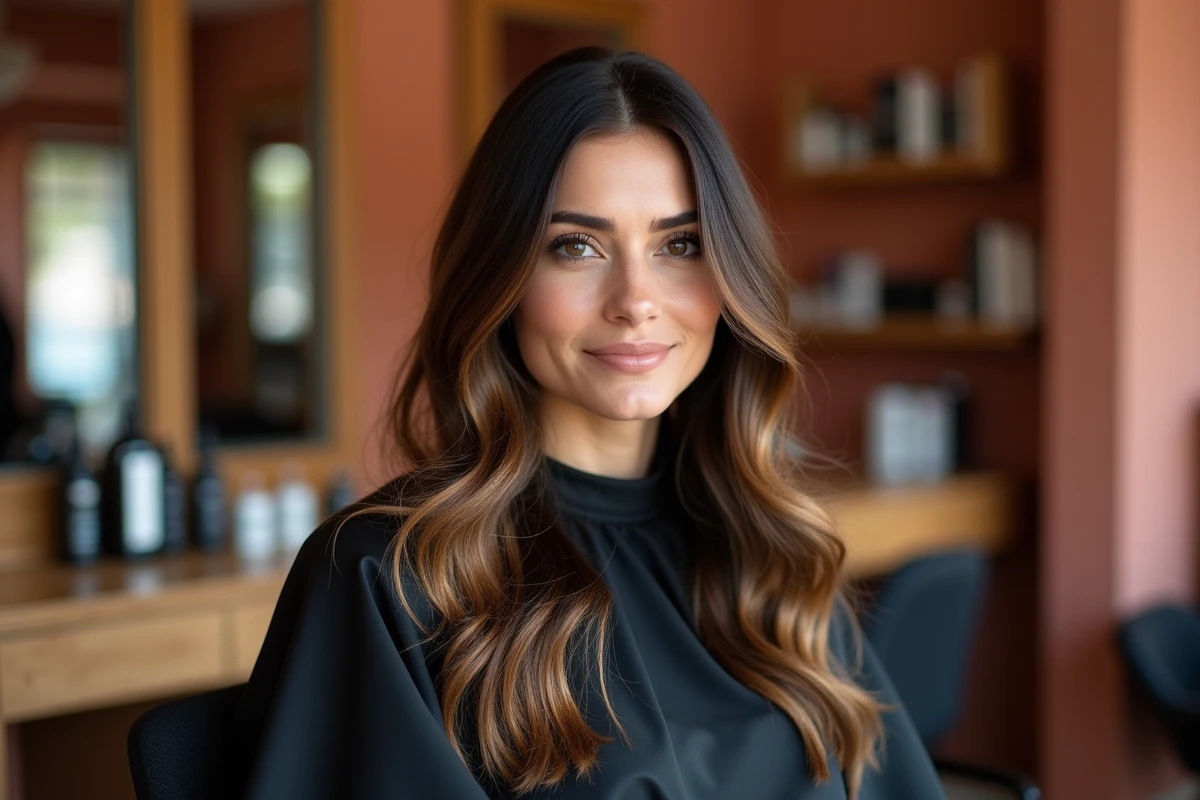
The caramel and honey balayage on dark brown hair remains one of the most frequent requests in hair salons. The technique is based on a simple principle: depositing warm highlights, between golden and amber brown, on a naturally dark base to create depth without visible breakage. Behind this apparent simplicity, several technical parameters condition the result, from scalp preparation to the precise placement of strands.
Scalp protection before balayage on dark bases
Colorists specialized in dark brown base coloring have reported an increase in skin sensitivities and scalp irritations during balayage sessions in recent years. The growing use of smoothing treatments, extensions, and heated tools weakens the skin barrier well before the application of a lightening product.
To limit these reactions, several protection protocols are developing in salons: application of lipid barriers on the scalp, use of protective oils along the partings, and adjustment of the pH of the lightening mixture. These steps, rarely mentioned in consumer guides, make a significant difference between a comfortable session and irritation that can last several days.
Before making an appointment, it may be helpful to prepare your hair base by reducing the frequency of smoothing treatments and spacing out aggressive shampoos. A less stressed scalp reacts better to the partial lightening involved in a successful caramel and honey balayage on dark brown hair.
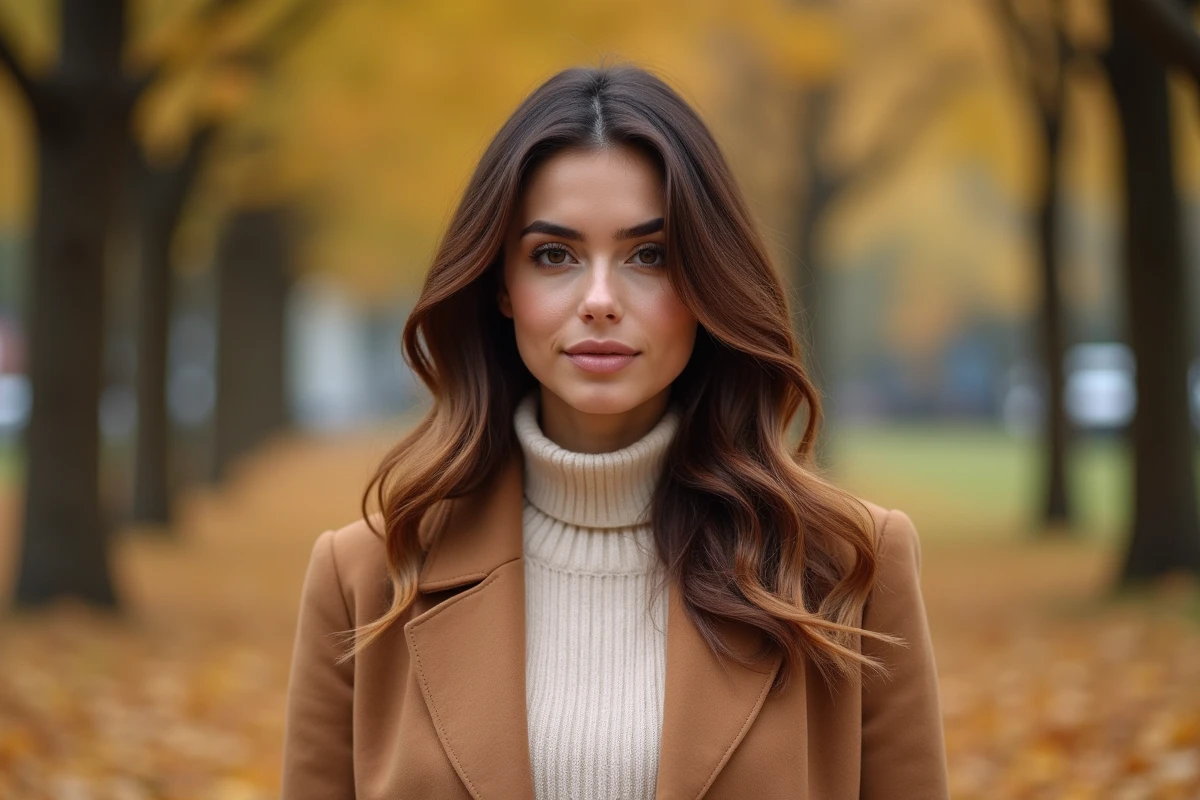
Caramel and honey balayage on curly or wavy hair: a placement that changes everything
The majority of content on caramel balayage focuses on straight or slightly wavy hair. Curly and textured dark brown hair presents different constraints, and the demand for results suited to these textures has significantly increased since 2023.
Face framing and luminous contouring on curls
On curly hair, light does not reflect evenly. The caramel and honey highlights should be placed on the contours of the face and the outer lengths, where the natural movement of the curl captures the most light. This is what colorists call face framing or luminous contouring.
An overly uniform placement on curly hair produces a flat result once the curls are dry. In contrast, fine veils concentrated on the strands framing the face and on the tips create a depth effect that straight hair achieves more easily.
- The front strands receive the lightest tones (golden honey) to brighten the complexion without touching the visible roots.
- The inner lengths retain the dark brown base, giving visual density to the hair.
- The tips can accommodate a slightly stronger caramel to avoid a washed-out effect on the curls most exposed to the sun.
This targeted placement requires more time in the salon than a classic balayage. The colorist works strand by strand, taking into account the bounce of the curl, which raises the result by several centimeters compared to straight hair.
Caramel and honey shades: two distinct highlights not to be confused
Caramel and honey are often used as synonyms, but they refer to two different families of highlights. Honey leans towards light golden, almost warm blonde, while caramel stays in a more coppery brown range. On a dark brown base, this distinction has direct consequences on the degree of lightening required.
Achieving a honey highlight on dark brown hair requires lifting more natural pigments, which puts more stress on the hair fiber. Caramel, being closer to the base, requires less intense lightening and produces a more blended result.
The choice between the two depends on several factors:
- Skin tone: warm skin (golden or olive undertones) naturally pairs with coppery caramel, while golden honey may suit more neutral complexions.
- The state of the hair: a fiber already sensitized by chemical treatments handles caramel better than honey, which requires more significant lightening.
- The desired effect: honey creates a more visible contrast with the dark base, while caramel remains in a more discreet and natural range.
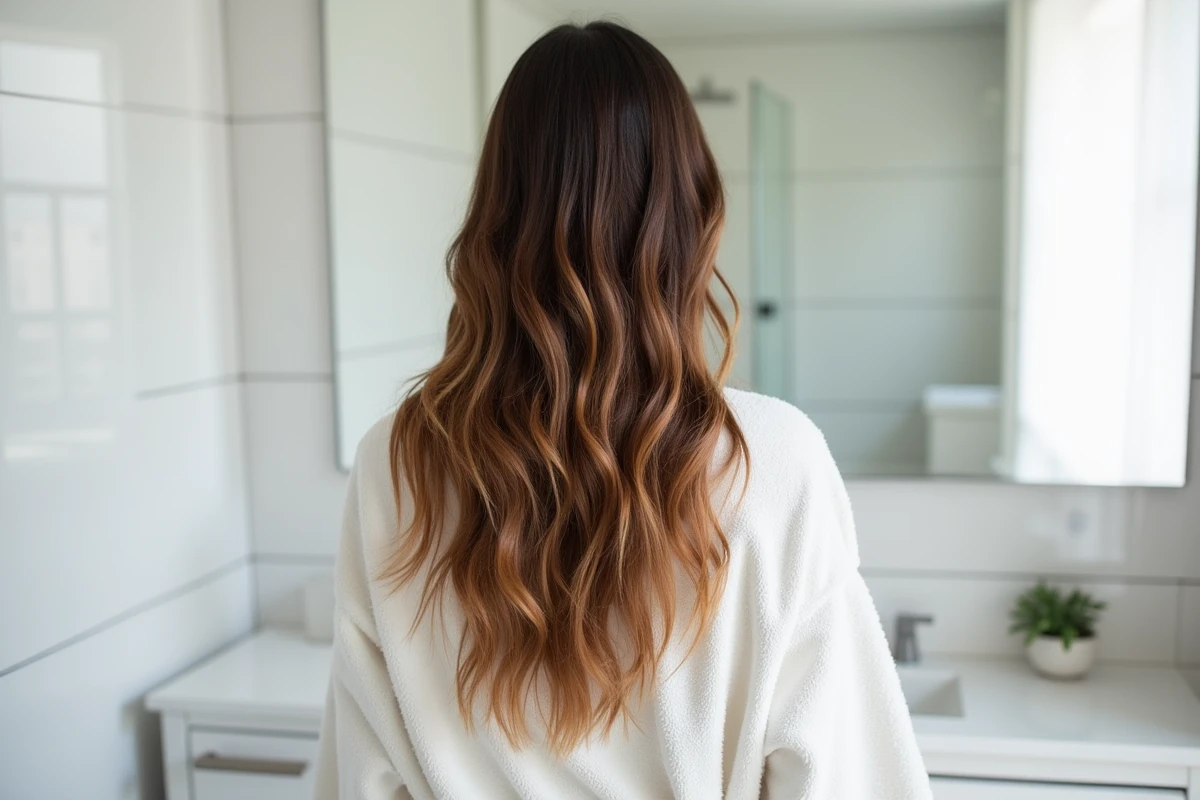
Caramel balayage as a hair transition: softening a too-marked ombré
A lesser-known use of caramel and honey balayage concerns hair transitions. Colorists assisting clients in returning to a darker base use this technique to soften a too-contrasted ombré or an overly dark uniform color.
The principle is to work with very fine veils in warm honey shades around the face. The result breaks the “helmet” effect of a monochrome color and creates a soft transition zone between the natural roots and the colored lengths. This gradual approach avoids the need for complete lightening to start from a homogeneous base.
Field reports vary on the number of sessions required. Some heavily artificially pigmented hair may need two to three sessions spaced weeks apart for a harmonious result. Others, less loaded with color, achieve a satisfactory blend in a single session.
Maintenance of caramel and honey highlights on dark brown hair
The longevity of the highlights directly depends on the hair care routine adopted after the session. Shampoos containing harsh sulfates open the hair cuticles and accelerate the loss of warm pigments. A sulfate-free shampoo preserves caramel shades for several weeks longer than a regular shampoo.
Golden pigment treatments, applied once a week, help revive the shine between salon visits. The spacing between balayage sessions varies, but the technique produces a natural and less visible regrowth due to the absence of a sharp demarcation at the roots.
Hair sun protection remains a often overlooked point. UV rays degrade warm highlights more quickly than cool tones, making protective sprays particularly useful on a caramel and honey balayage during exposure months.
The caramel and honey balayage on dark brown hair offers a wide margin for customization, from the placement of highlights to the choice of the dominant shade. The final result depends as much on the colorist’s technique as on the preparation beforehand and the maintenance afterward. Taking the time to discuss these parameters with a professional remains the best way to achieve a luminous and long-lasting effect.