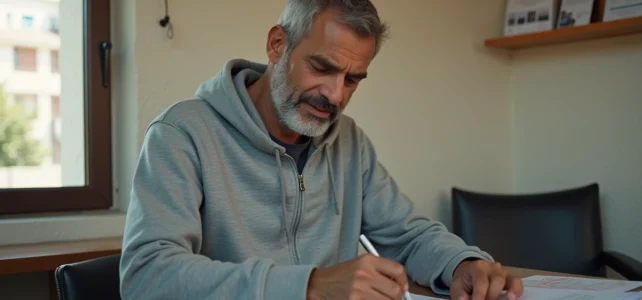
The French law makes no distinction: the State must guarantee emergency housing to anyone without shelter, regardless of their immigration status or where they come from. However, reality often contradicts this principle. Access to these services for undocumented individuals often resembles an obstacle course. Administrative hurdles multiply, and shelters are fully booked. At each step, the door opens slightly, but rarely swings wide open.
In the face of these barriers, some associations step in. They create tailored support, offer alternatives, and find solutions where the system gets bogged down. Some financial assistance exists, but it is subject to draconian criteria. A multitude of actors, changing rules, lengthy files and paperwork: the journey becomes complicated, and fatigue looms. In this maze, every bit of help counts, but nothing is ever simple.
Undocumented individuals in France: what rights to emergency housing?
In theory, the right to emergency housing is imposed on the State, without conditions of nationality or residency status. Anyone without shelter can assert this right, including foreigners in an irregular situation. The principle is embodied in the 115, a social emergency number that directs to emergency shelter centers (CHU) or other structures, often run by associations. But practice diverges from the text. On the ground, saturation looms. Available spots are scarce, and waiting lines grow longer. The communal social action centers (CCAS) sound the alarm: obtaining a spot is like winning the lottery. Some centers require proof of identity, restricting access for undocumented individuals, even though no law mandates this. Navigating to shelter then becomes a series of administrative trials. This is where associations intervene, supporting, guiding, and sometimes housing those left by the wayside. Their role is central, and their creativity is invaluable. They address the system’s shortcomings, cobble together solutions, and strive to preserve human dignity.
The notion of right to housing for individuals in irregular situations continues to divide. The proposed measures are often temporary and prioritize the most vulnerable profiles: families with children, sick individuals, pregnant women. Others must cope with uncertainty and the fear of being turned away at every step. If you wish to explore in more detail the housing assistance for undocumented individuals in France, the resource “Housing an undocumented person: what does the law say? – Zetop” provides precise insights into the legislation and practices. Access to emergency housing, even based on solidarity, remains dependent on the reality on the ground, where every spot counts and every night is negotiated.
How to access housing without a residence permit?
For undocumented individuals, securing real housing is an almost impossible challenge. Traditional access routes, such as social housing or permanent accommodation, systematically require the presentation of identity documents or proof of residency. Without a residence permit, most doors remain closed. Landlords, whether public or private, demand documents, administrative stability, and guarantees that the irregular situation does not allow for.
In this context, access to housing for undocumented individuals takes place elsewhere. The intervention of associations and social workers becomes crucial. They direct individuals to tailored solutions: temporary housing, solidarity cohabitation, hosting by individuals, or programs run by religious or secular groups. These solutions remain fragile, precarious, and often time-limited.
The opposable right to housing (DALO) does not apply to individuals without a residence permit. Housing assistance (APL, various allowances) is not accessible without legal status. Thus, the only remaining path is through support: progressing, file by file, in an attempt to open a door to a roof.
Here are the two main resources to seek:
- Social support: essential for navigating procedures, understanding rights, anticipating refusals, and compiling a solid application.
- Solidarity networks: associations and citizen collectives mobilize to find temporary solutions, sometimes a bed for the night or a room for a few weeks.
Living without a residence permit and seeking housing requires unwavering tenacity. Every attempt is a trial, every step demands energy and vigilance, and every victory remains fragile.
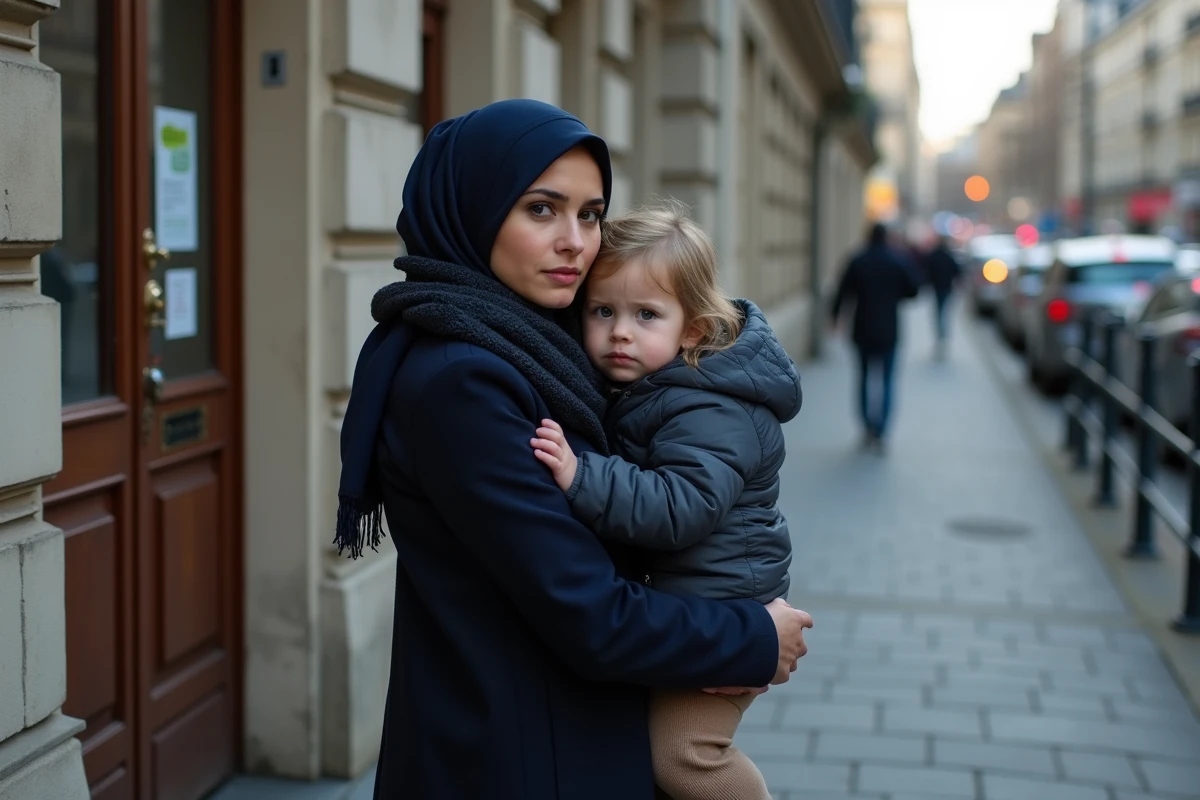
Associations, programs, and support: who to turn to in case of need?
On the ground, the search for housing assistance for undocumented individuals relies on a web of supportive actors. Associations play a central role. They guide, support, and sometimes provide shelter. Over time, they have become essential intermediaries for emergency housing and social support throughout France.
The communal social action centers (CCAS) are often the first point of contact. Their role is to assess the situation and trigger emergency housing measures. Registering with the CCAS of the municipality can sometimes lead to a referral to a shelter, whether temporary or stabilizing. The 115, the emergency housing hotline, remains open to all, regardless of nationality.
Main intermediaries for housing and support
Several organizations are involved in welcoming and supporting undocumented individuals:
- Specialized associations that assist foreigners, help with administrative procedures, provide social support, and sometimes direct individuals to solidarity housing.
- The social support service for access to housing, which helps compile applications, search for suitable solutions, and assert certain social rights.
Accompanied housing allows, in some cases, for personalized follow-up: guidance towards healthcare, support for employment, access to rights. But nothing is guaranteed: each program depends on entry criteria, the number of available spots, and the mobilization of teams. The stability of the journey relies on the consistency of social support in a context where uncertainty remains the norm.
In France, the right exists on paper, but access to housing for undocumented individuals is earned, day by day, through the tenacity of those affected and the mobilization of those who refuse to let them sleep outside. As long as demand exceeds supply, solidarity will remain the last bastion.