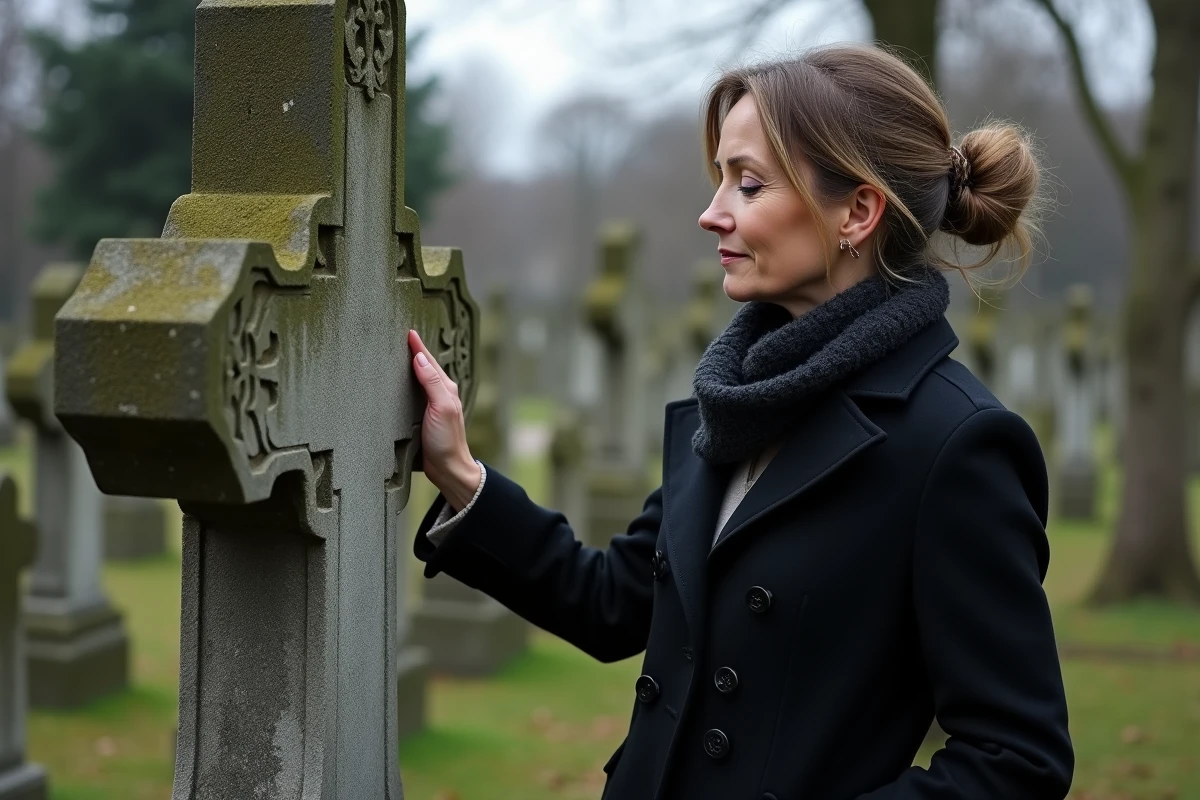
The choice of a cross for a grave is not just a matter of aesthetics or tradition. Behind each model, each material, lie family stories, silent convictions, and sometimes compromises imposed by regulations. The desire for a unique tribute can clash with the rigidity of local norms, or the need for simplicity may express itself in a stripped-down cross, devoid of any ornamentation.
Between religious heritages, local customs, and last wishes, it can be difficult to navigate the vast field of possibilities. Shape, material, engraving: every element matters, leaves a mark, seals a memory. A cross is never just an ornament: it is a trace, a silent message addressed to those who pass by or come to reflect.
Understanding the variety of funeral crosses and their symbolism
In the Christian funeral world, the cross is a given, it is obvious. But behind this universally recognized symbol, there are a thousand variations and just as many stories etched in stone. The Latin cross, all in verticality, embodies the hope of resurrection. The Celtic cross encircled by a circle links Christianity to ancient pagan rites, evoking the endless cycle. The Huguenot cross, the Occitan cross, the Maltese cross, or the Orthodox variant: each tells a story of fidelity, family resistance, and sometimes even a discreet revenge on history.
When it comes to choosing a cross for a grave, nothing is trivial. Behind the choice of a motif or ornament, there is often an intention, a tribute. Flowers, joined hands, palms, angels, life trees carved in stone or cast iron form numerous silent messages: gratitude, faith, hope, attachment to memory, every detail counts.
The material also plays its own part. Wood, simple and close to nature, evokes the emotion of embraced sobriety. Granite or stone assert durability, solid anchoring. Other families opt for marble, cast iron, bronze, or steel: each material projects a visual identity and gives the grave a look that is sometimes traditional, sometimes contemporary. Regional crosses carry a strong sense of belonging, almost a challenge to the anonymity of cemetery paths.
Faced with all these possibilities, the choice of the cross becomes an intimate act. It is no longer simply about selecting an object; it is about laying the cornerstone of a memory. A cross on a grave does not write the end of a story: it marks the starting point of a collective memory that will resonate for a long time within the family.
What criteria to consider for a cross that reflects the memory?
Choosing a cross is primarily about honoring the memory of the deceased as they lived, as they loved. Several markers help avoid getting lost in the range of family or administrative choices.
The life journey, spiritual ties, and the sensitivity of the deceased remain the primary compass. Some may prefer the authentic warmth of wood, while others may choose stone, so that the longevity of the monument corresponds to that of the memory. The material is never neutral: it gives weight, texture, and influences the aging of the cross over time and against the elements.
Next comes personalization. Engravings, motifs, dates, sometimes even a funeral plaque: everything contributes to creating a piece that reflects the family history. The craftsman can offer a minimalist cross or, conversely, one full of ornaments, depending on the available space and the desire to mark the place.
Here are the guidelines to accurately orient such a personal choice:
- Material: wood, granite, stone, marble, cast iron.
- Shape and style: from sobriety to ornamentation, from regional to classic or contemporary design.
- Personalization: engravings, colors, religious or non-religious motifs, addition of decorative elements.
- Values conveyed: respect for tradition, family memory, uniqueness of the burial site.
A stonemason or funeral professional understands the regulatory subtleties, anticipates practical constraints, and guides the family through sometimes burdensome formalities. Sometimes, the cross becomes an object of transmission: it migrates from one generation to another, a witness to bonds stronger than time.
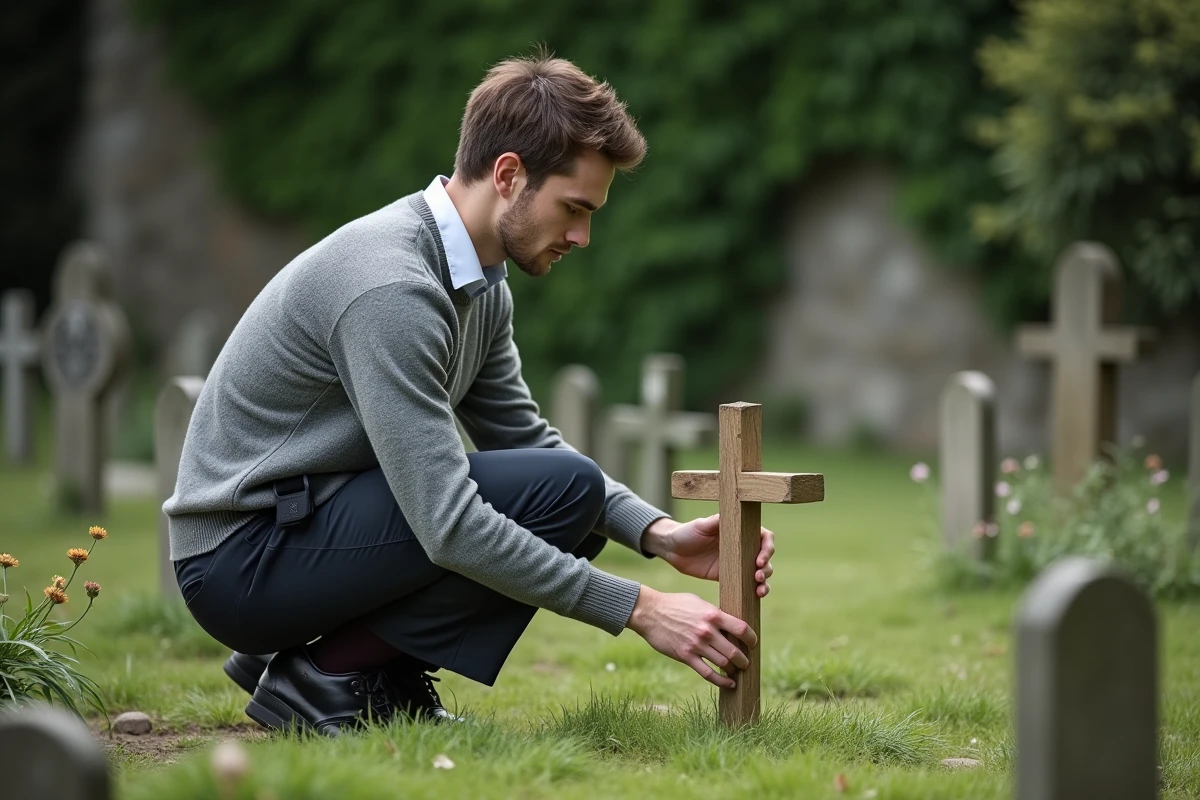
What rules and steps to follow to place a cross on a grave?
Installing a cross on a grave follows a series of frameworks often invisible to the casual visitor. First, each cemetery imposes its own rules: dimensions, materials, accepted motifs or not, nothing is left to chance to preserve the serenity of the whole and the dignity of the places. It is better to inquire before making any decisions: certain engravings and decorations are refused, sometimes for reasons as simple as maintaining a common harmony.
For the installation, the intervention of a professional is necessary in the vast majority of cases. Fixation on a stele, base, slab, or installation at the foot: each configuration requires careful preparation to avoid weakening the monument. A poorly treated support harms the cross but also the entire grave through infiltration or movement.
The care given to the cross does not stop at installation. Each material requires regular maintenance: wood must be protected and treated, cast iron requires monitoring against corrosion, marble fears certain overly aggressive cleaners. Regular maintenance, with a few touch-ups over the years, is enough to preserve the dignity of this family marker that, more than any other element, endures through the years as a persistent witness.
Ultimately, choosing a cross for a grave is about drawing a point of convergence between past and present. A simple gesture, sometimes heavy with meaning, that connects the living and their absent ones through a sign as discreet as it is unforgettable.